Combining trademarks, designs, copyright and unfair competition protection for textile products.
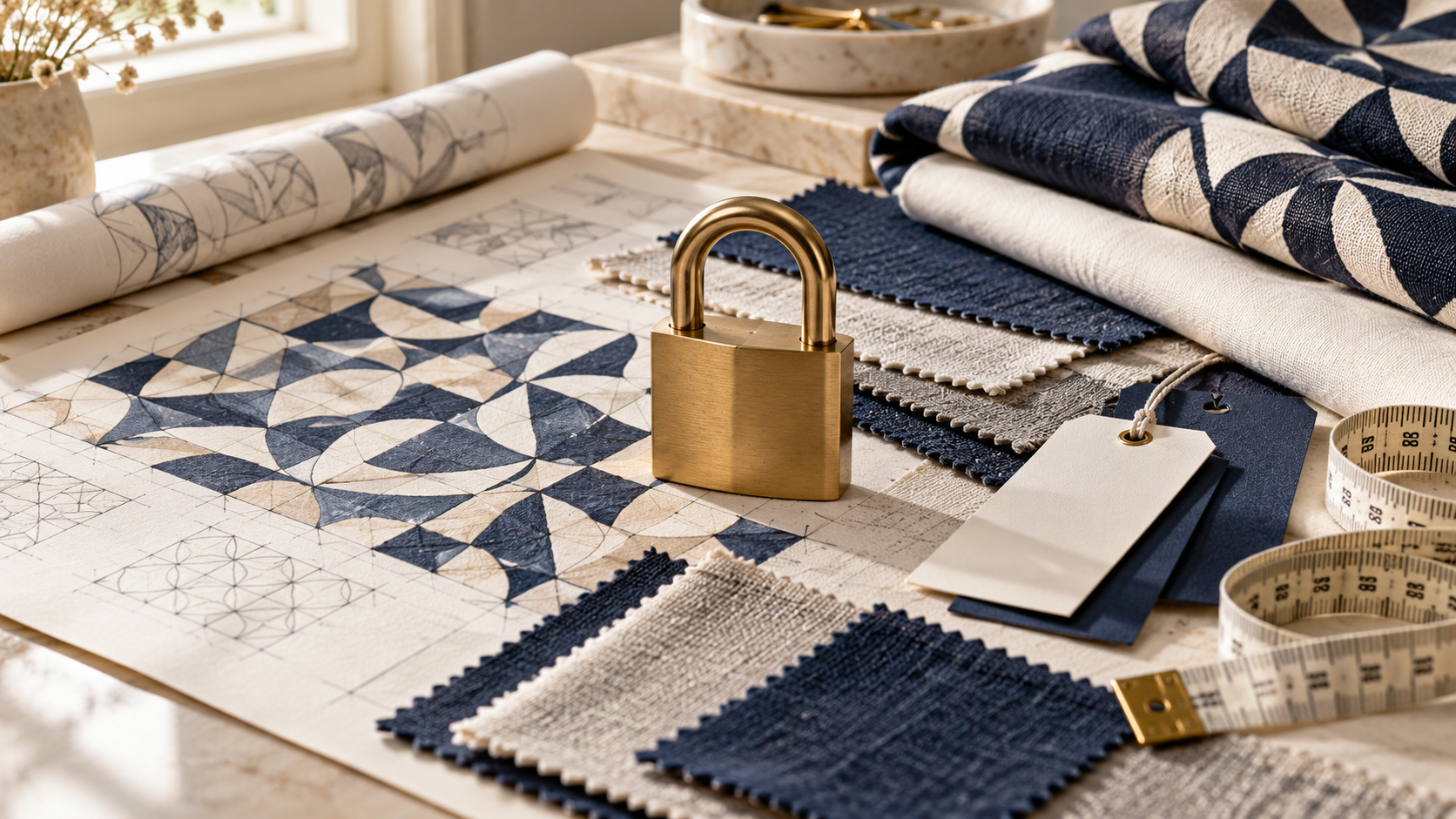
A textile product’s value may lie in its name, appearance, original pattern and market presentation. These features require different legal tools.
Collections can be short-lived and copies may appear while the original is still on sale. Plan protection before launch rather than after the first infringement. More than one right may apply, but each has its own conditions.
1. Which right protects what?
2. When is design registration useful?
A registered design protects the qualifying appearance within its legal scope; it is not a right over every product sharing the same general idea. The Code’s exclusions and limitations also matter.
Novelty and individual character: Assess prior public disclosures and the overall impression on the informed user. Filing before disclosure is the safest strategy. The Code has a limited twelve-month grace period for specified disclosures, but its conditions and foreign-law differences must be checked rather than assumed.
Multiple applications: Collection-based filings may offer practical and cost benefits. The relevant products generally must belong to the same Locarno class; ornaments and pattern designs have an exception under the rules. Observe the current procedural requirements and limits.
Cost and commercial life: Prioritise commercially important and readily copied models. A seasonal collection does not necessarily require registration of every item.
Unregistered designs
A design first made available to the public in Türkiye may qualify for three years of unregistered design protection under the Code. Protection is narrower and directed at copying; an independently created design is assessed differently. Evidence of the first disclosure, the design and copying is important. Registration can provide a stronger position for valuable products.
3. Copyright in patterns and prints
An original textile pattern, print or illustration may be a protected work under the Law on Intellectual and Artistic Works. Copyright does not arise from paying a registration fee. Keep original drawing files, intermediate versions and dated creation records to establish authorship and timing.
Employees and freelance designers
Authorship, authority to exercise economic rights and ownership or transfer of particular rights are distinct questions. Article 18 has rules concerning works created by employees in performing their duties, subject to the contract and nature of the work. A freelance commission should not be assumed to transfer every right merely because an invoice was paid.
Article 52 requires written form and separate identification of economic rights in transactions within its scope. Specify the rights and intended use, territory, duration, exclusivity and any adaptation or sublicensing arrangements. Moral rights require separate care. Employee and freelancer contracts should reflect the applicable legal structure.
4. Surplus production and copying by subcontractors
Common risks include manufacturing beyond the authorised order and sharing patterns, moulds or digital files with another producer. Contracts and operational controls should work together.
Limit use of patterns, samples, moulds, files and labels to the authorised order and define confidentiality responsibilities.
Prohibit unauthorised surplus production, address rejects and excess materials, and provide appropriate inspection and accounting rights.
Agree on lawful return or destruction of unused labels and files, including digital copies, and obtain written confirmation at termination.
Consider a properly drafted contractual penalty. Its enforceability and possible judicial adjustment depend on the parties and applicable rules; a clause does not guarantee automatic recovery of any chosen amount.
Supply only authorised quantities of branded labels and reconcile stocks. A contract without actual label control may leave a practical gap.
5. A roadmap for enforcement and exports
Preserve evidence: Where lawful, obtain the suspected copy with its invoice, packaging and labels, keep dated online records and consider court-supervised evidence preservation.
Identify the right: Analyse trademark, design, copyright and unfair competition grounds separately. Overlapping protection is possible when each set of requirements is met.
Choose urgent measures: Assess marketplace removal, customs action, an interim injunction and a warning in the right sequence. No single route fits every incident.
Coordinate proceedings: Civil damages and criminal complaints may complement each other only where the relevant legal and criminal conditions exist. Every design or contractual breach is not automatically a trademark crime.
Plan export markets: Registered trademark and design protection is territorial. Assess local rights and unregistered protections too; absence of your registration does not automatically make all copying lawful. Check priority periods and the appropriate foreign filing system. Madrid is for trademarks, not a design-registration route.
A coherent textile protection strategy combines suitable registrations, reliable creation and use records, appropriate employee and manufacturing contracts and continuing monitoring.
Official sources and related reading
- Industrial Property Code No. 6769
- TÜRKPATENT: design protection and guidance
- Law No. 5846: copyright, including Articles 18, 27 and 52
- Turkish Commercial Code: unfair competition
Previous part: Trademark infringement and legal protection.
Originally published: 6 October 2026. References checked: 30 October 2026. General information on Turkish law; specific products and contracts require individual assessment.